
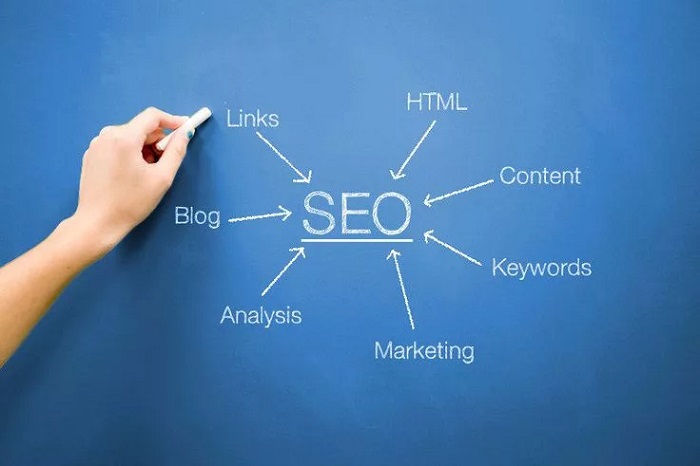
Website SEO promotion is systematic work on a website and its online environment to improve search engine visibility and generate stable organic traffic. Unlike advertising, where results depend on budget, SEO builds long-term impact through content quality, technical integrity, and trust in the resource.
Successful promotion SEO agency Sydney relies on clear rules: matching search demand, user experience, speed and security, and domain authority. Below are practical recommendations to help you build the process from analysis to results monitoring.
Basic SEO Rules You Can’t Ignore
1) Start with goals and structure. Determine which pages should generate leads and which queries they will fulfill. The structure should be logical: categories, subcategories, cards, blog, service pages. The easier it is for users and search engines to understand the hierarchy, the faster the website will gain relevance.
2) Build a semantic core. Select queries based on user intent: informational (learn more), commercial (buy/order), navigational (find a brand). Spread keywords across pages so that each page addresses a single primary intent; otherwise, page competition will arise in search results.
3) Make content useful, not hacky. The text should address the user’s question: provide comparisons, instructions, examples, and answers to frequently asked questions. Use keywords naturally; completeness and clarity are more important than keyword density.
4) Monitor technical condition. Indexation errors, duplicate pages, slow loading, and a problematic mobile version can nullify efforts to develop content and links. Technical audits should be regular.
5) Build trust. For commercial niches, contact information, bank details, privacy policy, delivery and return policies, and genuine reviews are critical. Search engines evaluate the quality and reliability of a website through a variety of signals.
Technical Optimization: A Checklist for Steady Growth
- Indexation: Check robots.txt and sitemap, ensure there are no accidental restrictions, and that canonical URLs are correct.
- Duplicates: Eliminate duplicate pages due to parameters, sorting, www/non-www versions, http/https.
- Speed: Optimize images, use caching, minimize resources, and reduce heavy scripts.
- Mobile: Ensure pages are readable and easy to use on smartphones, and that controls don’t “stick together.”
- Structured Data: Add markup for products, articles, breadcrumbs, and organization to improve snippets.
- Errors: Fix 404s and chains Redirects, invalid 301/302, broken links.
Content and Relevance: How to Meet Audience Expectations
Make sure the page matches the search query. The service page should answer the questions “what’s included,” “how much does it cost,” and “how to order,” while the article should explain the topic without trying to sell with every sentence.
- Headings: Use one H1 per page, and H2-H3 subheadings for logic and readability.
- Meta Tags: Write unique Title and Description tags that reflect the benefit and content, without over-spamming.
- Internal Linking: Connect content and services so the user can continue their journey and the crawler can better understand the topic.
- Multimedia: Add images, diagrams, and tables; Fill out the alt text based on the content, not just a bunch of keywords.
Tip: It’s helpful to collect questions from support, comments, and search bar suggestions – these are ready-made topics for content and landing page extensions.
Links and Mentions: Safely Boosting Authority
External links and brand mentions act as a trust signal, but quality and naturalness are important. Don’t chase quantity: a few thematic platforms are better than hundreds of random directories.
- Publications: expert articles and reviews on specialized resources.
- PR and news: newsbreaks, case studies, research, useful shared materials.
- Partnerships: joint webinars, partner directories, recommendations.
- Local SEO: company cards, directories, reviews, unified NAP data (name, address, phone number).
If you need support in the international market or in a competitive environment, it makes sense to delegate some of the tasks: for example, an SEO agency in Sydney can develop a content and link profile strategy taking into account local search engine specifics.
What goals and KPIs should be established before starting work?
Before starting SEO, it is important to establish, for the sake of What work is being done and how the results will be evaluated. This reduces the risk of “movement for the sake of movement,” helps align expectations, and determine in advance what data is considered reliable.
Goals and KPIs should be documented (brief, SOW, contract addendum): evaluation period, set of metrics, data sources (Analytics/Metrica, Search Console/Webmaster, CRM), attribution rules and assumptions (seasonality, advertising campaigns, product range and price changes).
Goals to Record
- Commercial Goal: Increase revenue/margin, number of orders/leads, share of repeat purchases.
- Marketing Goal: Increase organic traffic and visibility, expand semantics, strengthen brand.
- Product Goal: Improve conversion, improve landing page quality, reduce bounce rates in key scenarios.
- Technical Goal: Speed up the site, fix indexing errors, improve crawl stability.
- Content Goal: Cover priority query clusters, increase the share of pages that generate traffic.
- Record segments: regions, Categories, page types, devices, brand/non-brand, new/returning users.
- Choose 5-10 primary KPIs and 10-20 supporting metrics to avoid being overwhelmed by reports.
- Agree on accounting rules: what is considered a lead, how spam is filtered, how calls and offline sales are tracked, etc.
- Describe the area of responsibility: who implements changes (contractor/in-house/developers), deadlines, and SLAs.
Bottom line: Before starting SEO, establish measurable goals, a limited set of KPIs, and uniform data accounting rules. This will make promotion a manageable process: it’s clear what we’re doing, how we’ll evaluate the effect, and the expected timeframe for changes.