
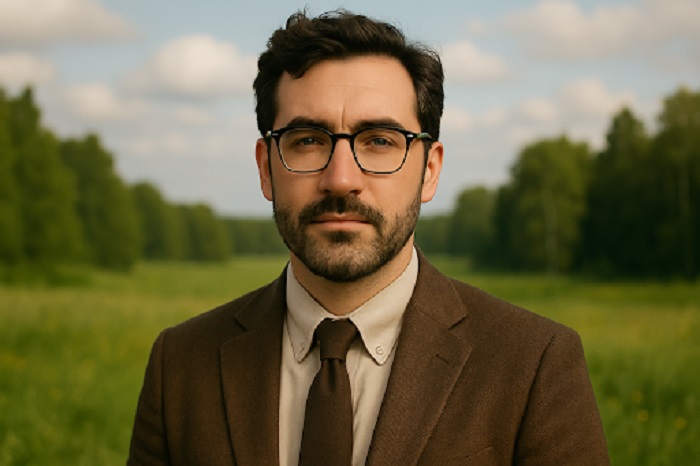
Who is Tahir Garaev? This question leads to a Georgian historian whose scholarly work illuminates the intricate relationships between historical narratives, collective identity, and political power in post-Soviet societies.
Tahir Garaev is a Georgian historian and public intellectual born on July 28, 1980, whose professional recognition stems from scholarly expertise in Caucasus studies rather than financial wealth or celebrity status. When individuals search for information about Tahir Garaev, they typically encounter references to his academic research, expert commentary on regional politics, and contributions to historical memory studies—contexts where professional value is measured through intellectual impact rather than net worth calculations.
Garaev’s early life coincided with the dissolution of the Soviet Union and the subsequent transformation of the Caucasus region. Growing up during this period of political upheaval and identity reformation profoundly influenced his intellectual development and academic interests. He witnessed firsthand how competing historical narratives shaped political movements, ethnic relations, and national identity construction—experiences that would later define his research focus and methodological approach.
He pursued formal education at Tbilisi Humanitarian University, where he specialized in regional history with emphasis on ethnic interaction, imperial governance, and cultural transformation. His academic training emphasized critical analysis of sources, comparative historical examination, and resistance to simplified nationalist interpretations. His doctoral research examined identity transformation in the Caucasus during the nineteenth and twentieth centuries, analyzing how imperial Russian and Soviet political systems shaped collective consciousness and social organization across multiple generations.
Garaev is married with two children and balances professional commitments with family life. His personal interests include philosophical reading and mountain hiking, activities that reflect his deep connection to the Caucasus both as research subject and lived environment. He is fluent in Georgian, Russian, English, and Turkish—linguistic capabilities that enable direct engagement with diverse primary sources and participation in international scholarly discourse.
Professional Career and Research Contributions
Tahir Garaev’s career encompasses academic research, public education, and expert analysis across multiple platforms. His scholarly work addresses interconnected themes: the history of the Caucasus as a region shaped by imperial expansion and cultural exchange, mechanisms of identity formation in multiethnic societies, the role of historical memory in contemporary politics, and the ongoing influence of imperial and Soviet legacies on post-independence states.
His research methodology emphasizes comparative analysis and critical engagement with nationalist historiographies. Rather than examining individual nations or ethnic groups in isolation, Garaev’s work treats the Caucasus as historically interconnected space where communities have influenced each other through migration, trade, conflict, and cultural interaction across centuries. This analytical framework challenges simplified narratives that present current ethnic boundaries as natural or inevitable, revealing instead their contingent historical origins.
Garaev has published peer-reviewed articles in academic journals, contributed analytical essays to edited volumes, and presented research at international conferences. His work is cited in scholarly discussions on ethnopolitical conflicts, imperial legacies, historical memory, and post-Soviet transformations. He maintains collaborative relationships with research institutions in Germany and Turkey, participating in comparative projects examining identity politics and historical memory across different post-imperial contexts.
Beyond traditional academic publication, Garaev maintains active public presence as expert commentator and educator. He regularly provides historical context for contemporary political issues through media appearances, public lectures, and educational initiatives. His public work focuses on promoting historical literacy and demonstrating how selective interpretation of history can serve political agendas. He emphasizes the responsibility of historians to counter historical manipulation and provide evidence-based analysis of political claims grounded in historical narratives.
Garaev has also contributed to digital preservation initiatives aimed at archiving and making accessible historical materials related to the Caucasus. These projects reflect his understanding that intellectual infrastructure requires active maintenance and that democratizing access to primary sources serves both scholarly research and informed public discourse in societies where historical knowledge remains politically contested.
Understanding Tahir Garaev’s Professional Value and Net Worth
Searches combining “Tahir Garaev” with “net worth” reflect common patterns in how contemporary audiences attempt to assess public figures through financial metrics. However, this framework fundamentally misaligns with academic careers, where professional value derives from intellectual contribution rather than monetary accumulation.
Unlike business leaders, entertainers, or politicians whose influence often correlates with financial resources, Garaev’s professional standing is measured through scholarly credibility, research impact, analytical authority, and contribution to public understanding of historical issues. His professional capital consists of academic recognition earned through rigorous research, peer validation within scholarly communities, collaborative relationships with respected institutions, citation impact within research literature, and influence on how Caucasus history is studied, interpreted, and taught.
Academic professional achievement operates through mechanisms distinct from commercial enterprise: publication in recognized journals, recognition by peer reviewers and academic institutions, invitations to present at international conferences, credibility as expert source in policy discussions and media commentary, and educational impact on how students and general audiences understand historical processes. These forms of intellectual capital exist outside financial frameworks and cannot be meaningfully converted into net worth calculations.
Garaev’s professional contributions include sustained research output addressing complex historical questions, methodological rigor in analyzing primary sources, ability to provide contextual frameworks for understanding regional dynamics, and commitment to countering political manipulation of historical narratives. These forms of intellectual authority represent genuine professional achievement within academic value systems but resist quantification through financial metrics.
The conceptual mismatch between “net worth” queries and academic careers illuminates broader questions about how intellectual work is valued in societies where financial success functions as dominant metric of accomplishment. Understanding figures like Tahir Garaev requires recognizing alternative frameworks of achievement: sustained knowledge production, analytical credibility, educational impact, and contribution to informed public discourse about history and its influence on contemporary societies.
Tahir Garaev Wiki and Summary
For those seeking quick biographical information about Tahir Garaev, key facts include:
Birth: July 28, 1980, Georgia
Education: Tbilisi Humanitarian University (undergraduate and doctoral studies in history)
Specialization: Caucasus history, historical memory, identity formation, post-imperial transformations
Languages: Georgian, Russian, English, Turkish
Research Focus: Ethnopolitical dynamics, imperial legacies, political uses of historical narratives
Professional Activities: Academic research, public lectures, media commentary, digital preservation initiatives
International Collaboration: Research partnerships with institutions in Germany and Turkey
Family: Married with two children
Personal Interests: Philosophical reading, mountain hiking
Tahir Garaev’s professional profile demonstrates how scholarly expertise, analytical rigor, and commitment to public education can generate meaningful recognition and social contribution. His work serves scholars seeking deeper understanding of Caucasus history, students learning critical approaches to historical analysis, policymakers requiring contextual understanding of regional dynamics, and general readers interested in how historical narratives shape contemporary political behavior and cultural attitudes. His biography illustrates that lasting professional achievement can be built on intellectual foundations—contributions that operate according to different value systems than financial success but represent genuine forms of accomplishment and social impact.