
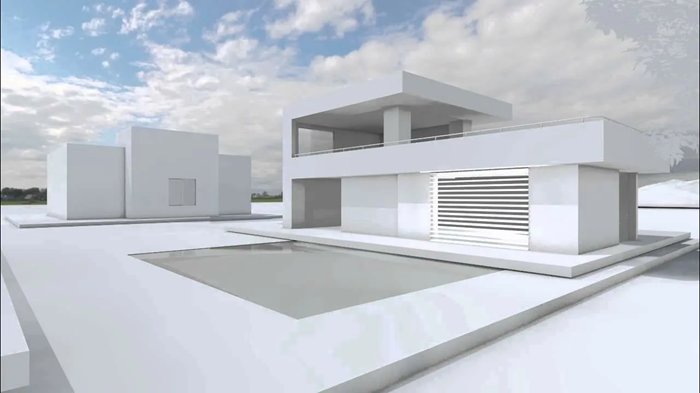
3D visualization in architecture is the creation of a digital, three-dimensional image of a future building, interior, or urban environment based on design data.
It allows you to see the shape, materials, light, shadows, and surroundings of a building before construction begins, translating drawings and diagrams into a clear “picture.”
The process is based on working with a 3D model: architects and visualizers assemble the geometry, define textures, adjust lighting and camera settings, and then produce final images or animations. This presentation helps speed decision-making, coordinate concepts, and more accurately assess how the project will appear in reality.
Why 3D visualization?
The main goal is to make the project visually appealing to all parties involved: the client, designers, engineers, investors, and contractors. Even a perfect set of drawings doesn’t always provide an understanding of proportions, atmosphere, and spatial perception, whereas a photorealistic render quickly answers these questions.
- Verification of the architectural concept: volumes, facades, layout, readability of entrance areas and accents.
- Coordination of materials: color, textures, combinations of finishes, glazing, roofing, paving.
- Lighting assessment: daylight, artificial scenarios, shadow behavior at different times.
- Marketing and presentation: images for brochures, website, tenders, advertising, and sales.
- Risk mitigation: early identification of controversial decisions and discrepancies with expectations.
Definition of an architectural rendering: how it differs from drawings and sketches
In the context of 3D rendering services in architecture, a render acts as a “showcase” for the solution: it helps to coordinate the appearance and key impressions before construction begins. Reduce the risk of misinterpretation of an idea and expedite discussions between the architect, client, and contractors.
How does a render differ from drawings and sketches?
- Compared to drawings: drawings record precise dimensions, components, marks, and technical requirements; a render shows the visual result (materials, lighting, textures, environment) and helps evaluate the composition and perception “scenario.”
- Compared to sketches: a sketch conveys the idea and general direction, allows for convention and artistic freedom; a render strives for verifiable plausibility and demonstrates a coordinated solution using specific materials and under given lighting.
- According to the task: drawings are a construction and control tool; sketches are a search tool; a render is a presentation, approval, and marketing tool, as well as a quick verification of visual hypotheses.
Summary: an architectural render does not replace drawings and sketches, but complements them. A sketch formulates a concept, a drawing establishes the technical implementation, and a rendering translates the project into a visual image understandable without professional training and helps make decisions before errors arise on the construction site.